
English
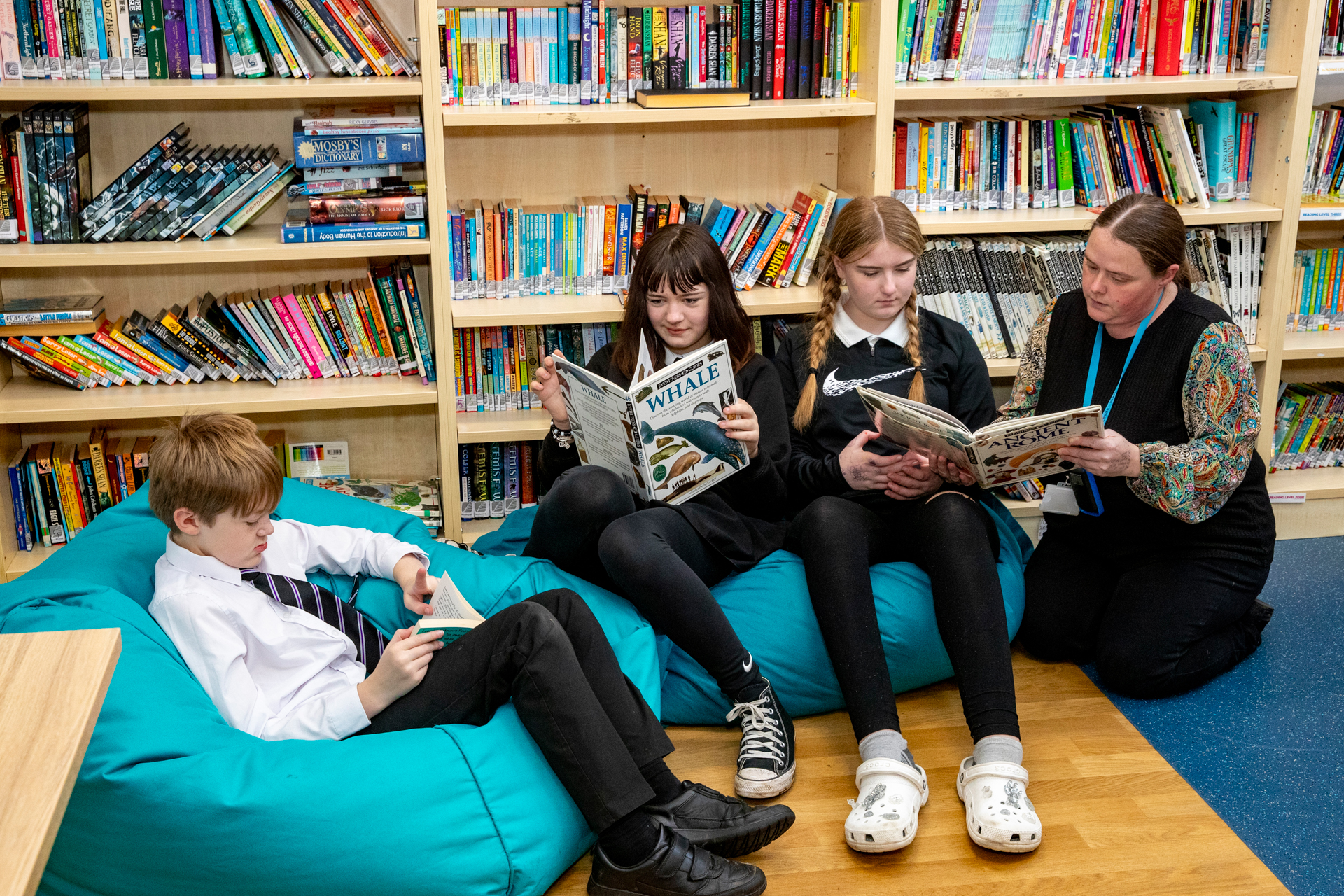
English is how students can connect and communicate with the world. Effective English skills increases our students’ community access, relationships, ability to learn independently and self-advocate effectively. English is the key to ensure your child is fully equipped to succeed in their next destinations. This could be Entry Level skills so that students can communicate clearly in real life scenarios, or gaining a GCSE in English that can open so many doors for them. Cross curricular links are made throughout the curriculum. Reading, writing, speaking and listening are not just for the English classroom, they are part of everyday life and therefore embedded in all curriculum subjects.
What do students learn?
KS3
Our Key Stage 3 English curriculum is matched to National Curriculum expectations and provides students with a rich range of literary and non-fiction experiences. Through the study of fiction, poetry, Shakespeare, 19th century literature and modern texts, students develop the skills to read, analyse, compare and evaluate a wide variety of texts while becoming confident and effective writers.
The curriculum is designed to strengthen literacy knowledge and address gaps in prior learning, ensuring all students can make progress from their starting points. Through creative, transactional and persuasive writing opportunities, alongside discussion and analysis, students develop the communication, reading and writing skills needed for success at Key Stage 4 and beyond.
KS45
Students following a Vocational Pathway will develop practical reading, writing, speaking and listening skills that support independence, employment and everyday life. Learning is centred around real-world situations, enabling students to communicate effectively, understand and present information, and engage confidently with different audiences. Students complete meaningful projects throughout the year, with strong cross-curricular links to mathematics, applying their skills to authentic tasks such as planning events, researching topics and presenting findings.
Students following a Level 1 pathway will complete English Functional Skills (Entry 1 – 3). These qualifications are widely recognised by employers and colleges. Functional Skills qualifications allow teachers to plan lessons that are highly personalised and meaningful to the student. Books and themes are chosen to respond to the interests of the students.
Students are encouraged to write for a range of purposes (e.g. biographies, formal letters, reviews and narratives), and to a variety of different audiences. Students are also given the opportunity to develop their spoken language skills, alongside reading and writing.
Students following a Level 2 pathway will study English Literature and English Language 2.0 (one or both). In Edexcel English Language 2.0 (Edexcel) Paper 1 focuses on non-fiction texts. Students study a range of functional 19th-century non-fiction texts while developing skills to analyse and evaluate unseen extracts. They also build transactional writing skills for different forms, audience and purposes. Paper 2 focuses on fiction texts. Students study a range of 20th and 21st century prose fiction and literary non-fiction while developing skills to analyse and compare. They also develop imaginative writing skills to engage the reader.
The Edexcel GCSE English Literature (Edexcel) course is assessed through two closed‑book written papers, each worth 50% of the final grade, covering four set texts: one Shakespeare play, one post‑1914 text, one 19th‑century novel and a poetry anthology. Paper 1 examines Shakespeare (with an extract‑based question and a whole‑text essay) and a post‑1914 British novel or play, while Paper 2 assesses a 19th‑century novel (again through extract and whole‑text questions) and poetry, requiring comparison of anthology poems with unseen poems and analysis of two unseen poems on a shared theme.