
Science
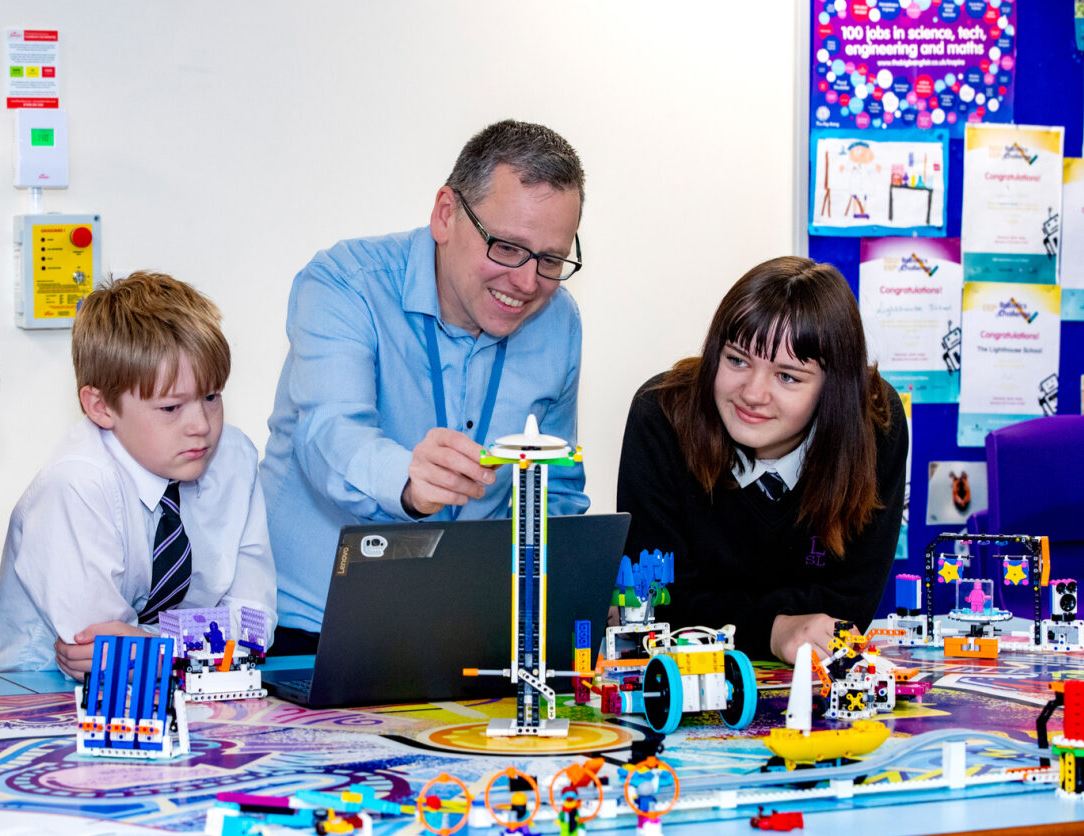
Science helps us to develop a deeper understanding of the world and how it works. At Lighthouse School, science focusses on understanding across all the scientific disciplines (Biology, Chemistry, and Physics) in a practical way that both satisfies and fosters curiosity. Students also acquire practical skills to help them plan and carry out experiments, analyse data, evaluate and develop conclusions based on their learning. We develop the students’ problem-solving skills and understanding of the scientific method in a way that benefits them across all their other subjects in school. Science enables the students to be creative and question the world around them, as well as delivering scientific skills for everyday life.
What do students learn?
KS3
At Key Stage 3, students follow a broad and ambitious science curriculum that is largely based on the White Rose Science programme, with adaptations to meet the needs of our learners while maintaining high expectations and strong progression. Students develop their knowledge and understanding across biology, chemistry and physics through engaging, practical and hands-on learning experiences that bring science to life. A strong emphasis is placed on working as independently as possible, developing scientific enquiry skills, conducting investigations, analysing results and applying learning to real-world contexts. The curriculum is carefully sequenced to build confidence and secure foundational knowledge, preparing students for success in GCSE Combined Science and future study at Key Stage 4.
KS45
Students following a Vocational pathway will study Entry Pathways Science Today qualification where develop an understanding of how science is used in everyday life while building practical, investigative and problem-solving skills. The course focuses on applying scientific knowledge in real-world situations and preparing students for further learning, independence and employment. Throughout the qualification, students develop:
Scientific enquiry and investigation skills.
Practical skills using equipment and materials safely.
Problem-solving and decision-making skills.
Communication, mathematical and technological skills in scientific contexts.
An understanding of how science influences everyday life and society.
The flexible structure of the qualification allows units to be selected to meet individual students' needs and interests, supporting personalised learning and progression.
Students following a Level 1 pathway will complete an Entry Level Certificate in Science. This qualification has specifically been designed to closely match the programme of study and provide a progression route to GCSE Combined Science. The certificate supports advancement in science by cementing core understanding and maximising engagement with the subject.
The aims and objectives of this qualification are to enable students to:
acquire a body of basic scientific knowledge and an understanding of some important scientific ideas consistent with the programme of study
develop basic experimental and investigative abilities
develop a basic understanding of some of the important technological and environmental applications of science and the economic, ethical and social implications consistent with the programme of study
develop an interest in science leading to further study at a higher level, e.g. the Edexcel GCSE in Combined Science.
Students following a Level 2 pathway will complete Combined Science Trilogy. This qualification gives students a broad understanding of Biology Chemistry and Physics through clear and logically sequenced content that mirrors the separate Sciences. It covers key ideas such as cells organisation, infection and response bioenergetics and ecology in biology atomic structure bonding chemical changes and energy changes in chemistry and energy, electricity particle models, atomic structure forces and waves in physics. Students also develop strong scientific skills through required practicals and regular opportunities to apply mathematical methods, analyse data and evaluate experimental work. The course aims to build secure scientific understanding and support progression to further study.